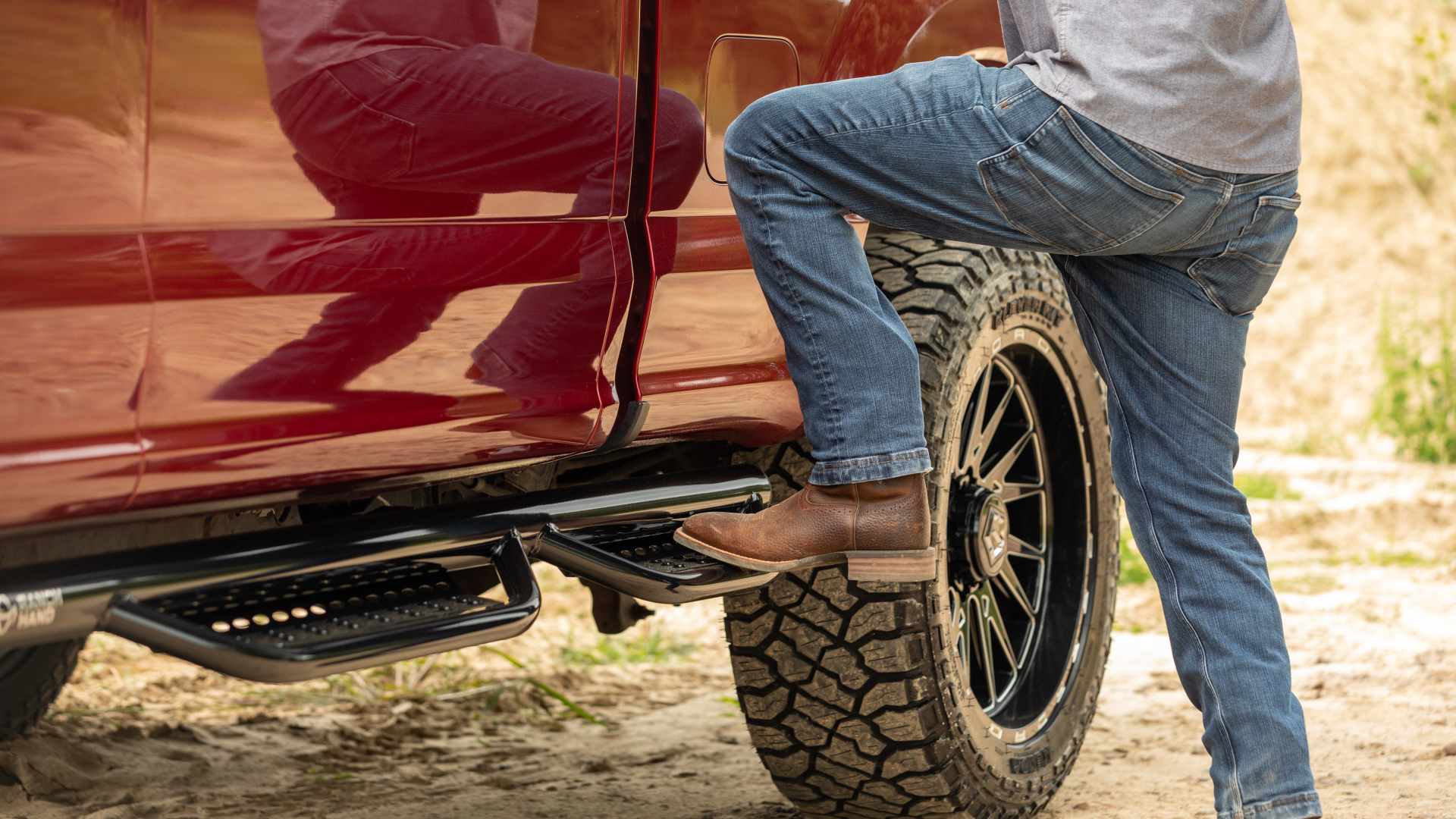
If you've been shopping for truck accessories, you've probably come across the term wheel-to-wheel side steps. At first glance, they may look similar to traditional side steps or running boards, but there's one important difference that makes them a favorite among truck owners who actually use their trucks for work.
Whether you're climbing into the cab, grabbing tools from a crossover tool box, or reaching into the bed to hook up a trailer, the right side steps can make every task easier. Choosing between wheel-to-wheel side steps and cab-length side steps isn't just about appearance. It's about how you use your truck every day.
In this guide, we'll explain exactly what wheel-to-wheel side steps are, how they're different from cab-length options, why wheelbase matters, and how to choose between Ranch Hand's 4-step and 6-step configurations.
- What to Know Before You Start
- Truck Side Steps vs. Running Boards
- Why Wheelbase Matters
- Wheel-to-Wheel Side Steps vs. Cab-Length Side Steps
- Benefits of Wheel-to-Wheel Side Step
- Understanding Ranch Hand Side Steps
- Which Wheel-to-Wheel Side Steps Are Right for You?
- Why Choose Ranch Hand Side Steps?
- FAQ About Wheel-to-Wheel Side Steps
What Are Wheel-to-Wheel Side Steps?
Wheel-to-wheel side steps are truck side steps that extend from the front wheel opening all the way to the rear wheel opening, providing stepping points for both the cab and the truck bed.
Unlike traditional cab-length side steps, which stop beneath the passenger compartment, wheel-to-wheel designs continue rearward along the bed. This creates an additional step near the rear wheel, giving you easier access to cargo without climbing into the bed or balancing on the tire.
For truck owners who use their pickup as a tool instead of just transportation, that extra step quickly becomes one of the most-used features on the truck.
Whether you're loading equipment, securing cargo, accessing a toolbox, or connecting a trailer, having a stable stepping point next to the bed saves time and effort throughout the day.
Wheel-to-Wheel Side Steps at a Glance
Wheel-to-wheel side steps typically feature:
- Full-length design extending from wheel to wheel
- Front steps for entering and exiting the cab
- Additional rear steps for truck bed access
- Heavy-duty construction for work truck durability
- Vehicle-specific fitment for proper installation
They combine the convenience of traditional side steps with functionality designed around how pickup trucks are actually used.
Truck Side Steps vs. Running Boards
You'll often hear truck side steps vs running boards used interchangeably, but there are some differences.
Running boards generally feature one continuous stepping surface that spans the length of the cab. They offer a clean appearance and comfortable footing for entering and exiting the truck.
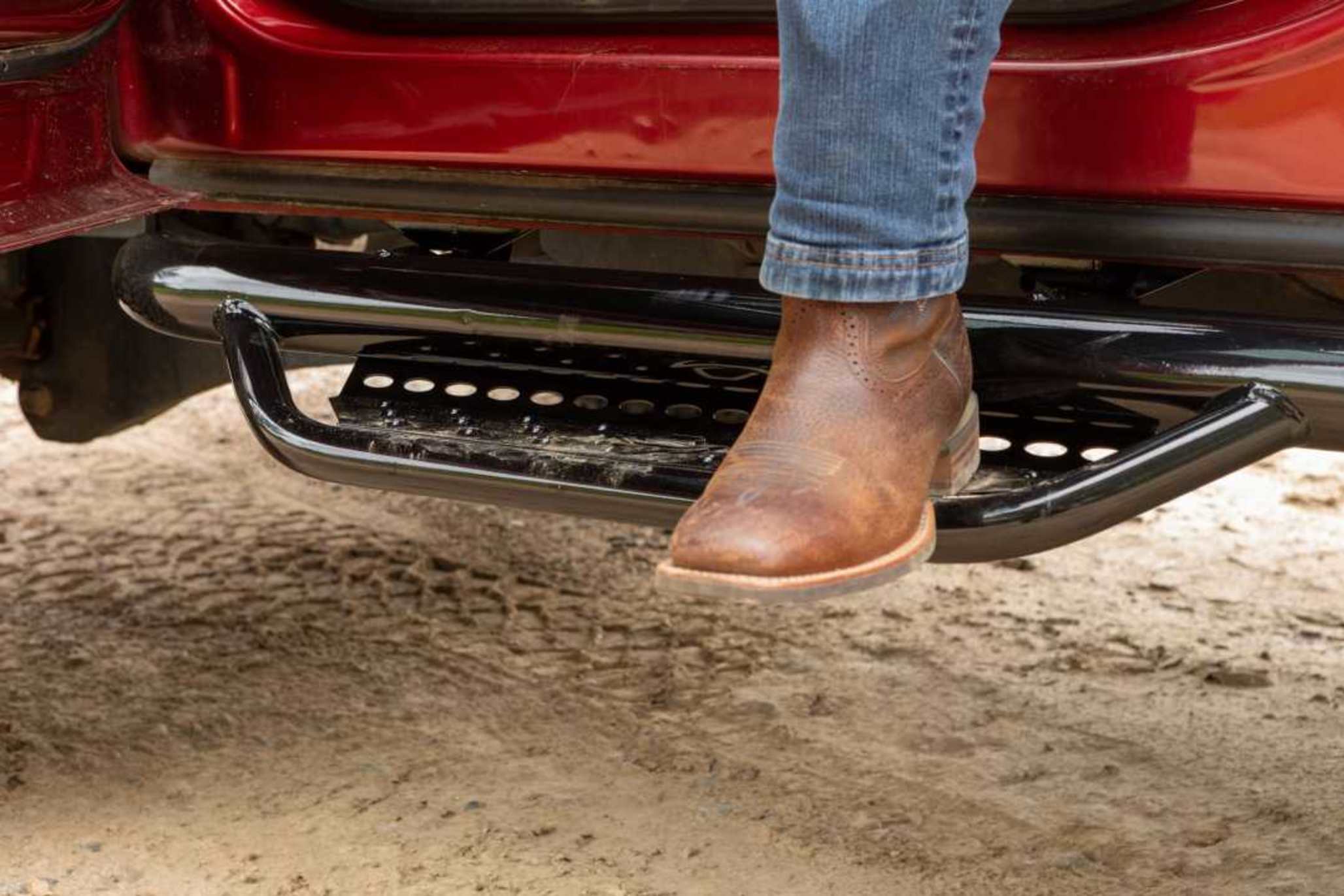
Side steps, on the other hand, typically use individual step pads mounted to round or oval steel tubing. This design often provides better traction in muddy, snowy, or wet conditions because debris has more room to fall through instead of collecting on a full-width platform.
Wheel-to-wheel side steps take the traditional side step concept one step further by extending behind the cab to provide access to the truck bed.
For many truck owners, especially those who tow, haul, or work from their pickup, that additional rear step becomes far more valuable than a longer running board.
Why Wheelbase Matters
Before comparing step styles, it helps to understand one measurement that affects nearly every truck accessory: wheelbase.
A truck's wheelbase is simply the distance between the center of the front axle and the center of the rear axle.
Longer wheelbases usually mean:
- Longer overall trucks
- Larger cargo beds
- More distance between the cab and rear wheels
- More room for additional stepping points
This matters because a truck with a longer wheelbase leaves more space between the front cab steps and the rear wheel opening. Without additional steps, accessing the middle or rear portion of the bed often requires stretching over the bedside or climbing into the bed itself.
Wheel-to-wheel side steps solve this by placing convenient stepping points exactly where they're needed.
The longer the truck, the more valuable those additional steps become.
Wheel-to-Wheel Side Steps vs. Cab-Length Side Steps
Not all truck side steps are designed for the same job. While wheel-to-wheel side steps and cab-length side steps share the same primary purpose of making it easier to get in and out of your truck, the overall experience they provide can be very different. The biggest distinction comes down to how you use your truck. If your pickup regularly pulls double duty as a work vehicle, hauls equipment, or requires frequent access to the bed, the extra length of a wheel-to-wheel design can make everyday tasks noticeably easier. If your truck is primarily used for commuting, running errands, or light weekend projects, a cab-length option may provide everything you need.
Here's how the two styles compare.
Cab-Length Side Steps
Cab-length side steps extend only beneath the passenger compartment.
They are designed primarily to:
- Help drivers and passengers enter the cab
- Improve everyday accessibility
- Maintain a traditional appearance
- Keep overall weight and cost lower
For many daily-driven pickups, this is all that's needed.
If your truck rarely carries equipment in the bed or you're primarily using it for commuting and occasional hauling, cab-length side steps may provide all the functionality you need.
Wheel-to-Wheel Side Steps
Wheel-to-wheel side steps do everything cab-length steps do, while adding an entirely new level of functionality.
- Because they continue rearward along the bed, they provide:
- Easier access to cargo
- Better reach over tall beside rails
- Improved access to tool boxes and truck accessories
- Additional stepping points for work-related tasks
That added convenience becomes especially noticeable on lifted trucks or heavy-duty pickups where climbing into the bed isn't always practical.
Side-By-Side Comparison
| FEATURE | CAB-LENGTH SIDE STEPS | WHEEL-TO-WHEEL SIDE STEPS |
| Overall Length | Cab only | Extends from front wheel to rear wheel |
| Cab Access | Excellent | Excellent |
| Truck Bed Acess | Limited | Outstanding |
| Rear Stepping Point | No | No |
| Best For | Daily Drivers | Work trucks, towing, hauling, fleet vehicles |

Benefits of Wheel-to-Wheel Side Steps
At first glance, wheel-to-wheel side steps may look like a longer version of a standard running board. In reality, that extra length changes how you interact with your truck every day. Instead of only making it easier to get into the cab, they create additional access points that simplify loading gear, reaching into the bed, and working around the truck. Whether you use your pickup for work, towing, recreation, or a combination of all three, those added stepping points can make routine tasks faster, safer, and more comfortable.
Easier Cab Entry and Exit
Like any quality truck side step, wheel-to-wheel models provide stable footing for getting into and out of the cab. Wide stepping surfaces and aggressive traction help improve confidence in wet, muddy, snowy, or icy conditions while reducing the distance you need to climb.
This is especially helpful for:
- Lifted trucks
- Heavy-duty pickups
- Older drivers
- Families with children
- Anyone climbing in and out throughout the workday
A secure step can make entering the truck more comfortable while helping reduce unnecessary strain on your knees and back.
Better Truck Bed Access
This is where wheel-to-wheel side steps truly separate themselves from traditional cab-length options.
The integrated rear stepping point allows you to comfortably reach over the bedside without climbing into the truck bed or balancing on the rear tire. That extra reach makes many everyday tasks quicker, easier, and more stable.
That makes everyday jobs much easier, including:
- Retrieving tools
- Loading equipment
- Securing cargo straps
- Reaching coolers or gear
- Cleaning out the bed
- Washing the roof or rear window
If you've ever found yourself standing on the rear tire to reach something, you already understand why this matters.
Ideal for Work Trucks
For many truck owners, the bed serves as a mobile workstation. Contractors, ranchers, farmers, fleet operators, utility crews, and other professionals often access their equipment dozens of times throughout the day. Every unnecessary climb into the bed takes time and adds extra wear on your body.
Wheel-to-wheel side steps make it easier to access:
- Crossover toolboxes
- Headache racks
- Ladder racks
- Fuel transfer tanks
- Air compressors
- Jobsite equipment
Instead of climbing into the bed dozens of times throughout the day, you can simply step onto the rear step and reach what you need.
That may seem like a small improvement, but over months and years of daily use, it can save countless trips into and out of the truck bed while making routine tasks quicker and more comfortable.
Simplifies Towing Tasks
The benefits don't stop when the truck bed is empty. Truck owners who tow campers, equipment trailers, horse trailers, or work trailers also appreciate having an extra place to stand while preparing to tow.
The rear step provides easier access when working around:
- 5th wheel hitches
- Gooseneck hitches
- Safety chains
- Electrical connections
- Cargo in front of the hitch
Whether you're connecting wiring, checking safety chains, locking a hitch, or securing cargo before hitting the road, the additional stepping point gives you a more comfortable and stable position to work from. It's one of those small details that can make hitching up feel noticeably easier, especially on taller trucks.

Understanding Ranch Hand Side Steps
Not all wheel-to-wheel side steps are configured the same. Ranch Hand side steps are available in both 4-step and 6-step configurations on select truck applications, allowing owners to choose the layout that best fits their truck and how they use it. While both designs provide wheel-to-wheel coverage, the number and placement of the stepping pads are different.
4-Step Configuration
4-step configuration includes:
- Two stepping pads per side
- One step beneath the cab
- One rear step near the truck bed
This design delivers the core benefits of wheel-to-wheel side steps while maintaining a clean, streamlined appearance.
For many truck owners, it's the perfect balance between everyday cab access and the added convenience of a rear bed step.
It's an excellent option for daily drivers, recreational towing, and trucks that occasionally serve as work vehicles.
6-Step Configuration
6-step configuration adds another stepping point on each side.
Instead of two steps per side, it features three:
- Front cab step
- Additional intermediate step behind the cab
- Rear truck bed step
The extra stepping surface creates easier access along the entire length of the truck, particularly on longer cab and bed combinations where the distance between the front and rear steps is greater.
For work trucks, fleet vehicles, and heavy-duty pickups that see constant use, the additional step improves convenience by giving you more places to comfortably climb in, climb out, and reach equipment.
If your truck spends most of its life on the jobsite, the 6-step configuration often provides the greatest versatility.

Which Wheel-to-Wheel Side Steps Are Right for You?
Not every truck owner uses their pickup the same way, which is why there's no one-size-fits-all answer when choosing side steps. The right option depends on how often you access the truck bed, whether you tow trailers, the type of work your truck performs, and even your truck's cab and bed configuration. Taking a few minutes to think about how you use your truck on a typical day can help you choose a setup that delivers the right balance of convenience, accessibility, and functionality.
Ask yourself a few simple questions:
Do you frequently access your truck bed?
If you're constantly reaching into the bed for tools, equipment, cargo, or supplies, wheel-to-wheel side steps can significantly improve convenience.
Do you tow often?
Owners with gooseneck or 5th wheel trailers benefit from the extra stepping point when connecting hitches or checking cargo.
Is your truck built for work?
Commercial vehicles, ranch trucks, farm trucks, fleet pickups, and contractor vehicles typically get the most value from wheel-to-wheel designs because drivers are constantly moving between the cab and bed.
What cab and bed configuration do you have?
Longer trucks often benefit from additional stepping points, making a 6-step configuration an excellent choice when available.
Do you prefer simplicity or maximum functionality?
Some owners prefer the cleaner appearance of a 4-step design, while others prioritize the added convenience of the 6-step configuration.
Neither is inherently better. The best choice depends on your truck, your work, and your daily routine.

Why Choose Ranch Hand Side Steps?
For decades, Ranch Hand has built products with one goal in mind: creating truck accessories that are ready for real work.
That same philosophy carries over into every set of Ranch Hand side steps.
Constructed from heavy-duty steel and engineered specifically for hardworking pickups, Ranch Hand wheel-to-wheel side steps are designed to provide dependable footing, improved accessibility, and the durability truck owners expect whether they're heading to the jobsite, the ranch, or towing on the weekend.
When you're climbing into your truck several times a day or constantly accessing equipment in the bed, quality matters. A well-built set of side steps doesn't just make your truck easier to use today. It continues to do the job year after year.
FAQ About Wheel-to-Wheel Side Steps
-
What are wheel-to-wheel side steps?
Wheel-to-wheel side steps extend from the front wheel opening to the rear wheel opening, providing steps for entering the cab as well as an additional rear step for easier truck bed access.
-
Are wheel-to-wheel running boards the same as wheel-to-wheel side steps?
The terms are often used interchangeably, but side steps typically feature individual step pads mounted to steel tubing, while running boards generally use one continuous stepping surface. Both can offer wheel-to-wheel coverage depending on the design.
-
Are wheel-to-wheel side steps better than cab-length side steps?
It depends on how you use your truck. Cab-length side steps are ideal for improving cab access, while wheel-to-wheel side steps add the convenience of easier truck bed access with a rear stepping point.
-
Will wheel-to-wheel side steps fit every truck?
No. Side steps are designed for specific year, make, model, cab, and bed combinations. Always verify vehicle compatibility before purchasing.
-
Are wheel-to-wheel side steps worth it?
If you regularly use your truck bed for work, towing, or hauling, most owners find the added rear stepping point well worth it. The extra accessibility can make everyday tasks faster, easier, and more comfortable.